
 Türkçe
 English
 German
 Russia
 Arabic
 Chinese
 Spanish
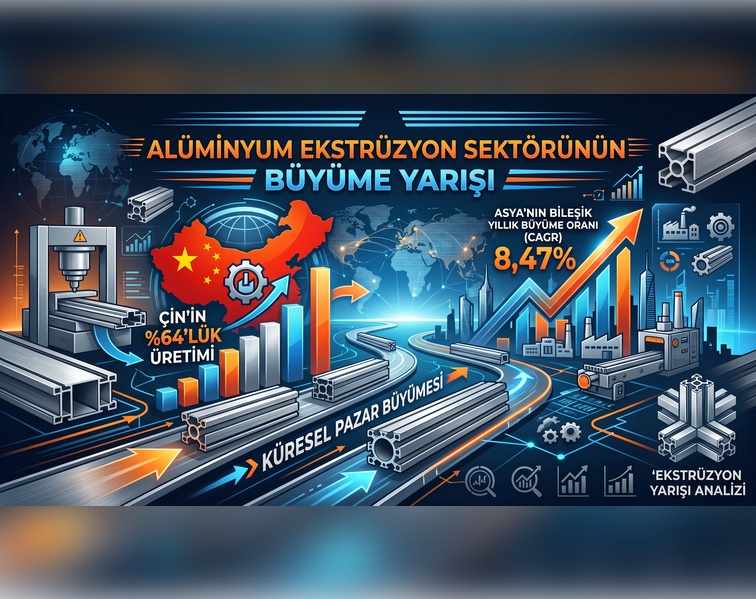
The global aluminium downstream market is being reshaped by three simultaneous forces: rapid extrusion growth in Asia, increasingly defensive trade policies, and rising demand from automotive, renewable energy, packaging and advanced manufacturing. China remains the dominant extrusion powerhouse, but India and Southeast Asia are building their own capacity and demand centres.
At the same time, Chinese downstream exports are facing greater scrutiny in Australia and the US, while new applications such as giga-casting and recyclable aluminium packaging are opening fresh demand pools.
For traders and investors, the story is increasingly about where aluminium is processed, where it is consumed and how trade barriers are redirecting those flows.
China remains the undisputed centre of the global aluminium extrusion industry, accounting for around 64 per cent of global extrusion capacity and about 66 per cent of global consumption. Its extrusion demand is also shifting beyond traditional construction towards EVs, solar PV, energy storage, electrical systems and thermal management. India, meanwhile, is expected to see extrusion demand rise from 795,000 tonnes in 2025 to 858,000 tonnes in 2026, although low-capacity utilisation remains a structural challenge.
Asian exports of aluminium bars, rods and profiles, China continued to dominate the trend, but its 2025 exports fell 18.28 per cent to 890,733 tonnes. Malaysia, by contrast, recorded growth, while Vietnam has strengthened its position in the regional trade network. China’s export trajectory has also been influenced by the cancellation of tax rebates and changing global trade economics. Meanwhile, the UAE, India and Thailand remain major Asian buyers.
China’s aluminium extrusion exports fell from 1.27 million tonnes in 2024 to 1.02 million tonnes in 2025, a decline of about 19.7 per cent. The contraction reflected weaker demand in traditional overseas markets, tighter trade measures and a changing export landscape. At the same time, China’s extrusion industry increasingly shifted towards Southeast Asia and other emerging markets, while industrial and higher-value extrusion applications offered some support.
Source: AlCircle