
 Türkçe
 English
 German
 Russia
 Arabic
 Chinese
 Spanish
The global aluminium industry is undergoing a significant transformation driven by rising energy costs, geopolitical developments, and disruptions in supply chains. Europe and the United States are taking strategic steps to expand their domestic aluminium production capacity in an effort to reduce dependence on imports.
One of the clearest signs of this strategy is the planned restart of several primary aluminium smelters that have remained idle for years. Industry experts believe these investments may not dramatically change global supply in the short term, but they will significantly enhance long-term supply security.
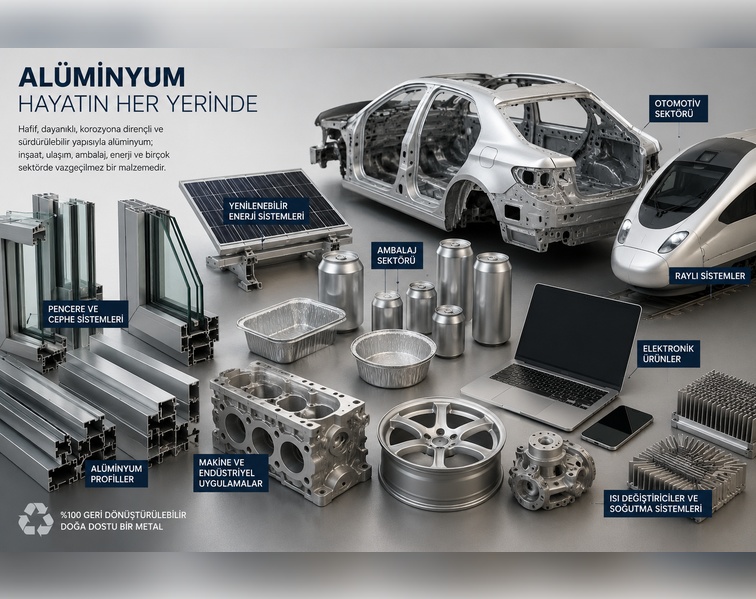
Aluminium has become a critical raw material for strategic industries, including automotive, aerospace, defense, renewable energy, and electric vehicles. As a result, many countries are supporting domestic production not only for economic reasons but also as a matter of industrial and national security.
While the European Union continues to promote low-carbon production technologies, energy efficiency, and recycling investments, the United States is pursuing industrial policies aimed at strengthening domestic producers and expanding its aluminium production capacity.
According to industry experts, the key drivers of competitiveness in the coming years will be low-carbon production, sustainable energy use, technological transformation, and the development of high value-added aluminium products.