
 Türkçe
 English
 German
 Russia
 Arabic
 Chinese
 Spanish
Advancements in electric air mobility are further increasing the importance of aluminium in next-generation transportation technologies.
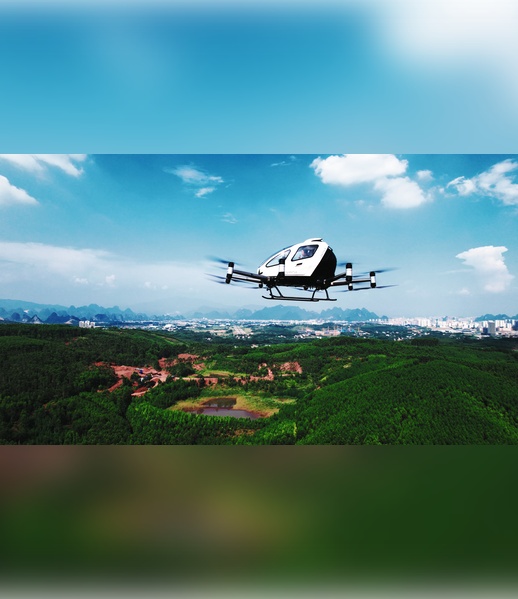
Advancements in electric air mobility are further increasing the importance of aluminium in next-generation transportation technologies. Developed by the Chinese company EHang, the EH216-S is one of the world's first commercially certified autonomous electric vertical take-off and landing (eVTOL) aircraft, paving the way for the future of urban air transportation.
Designed to carry two passengers, the EH216-S is powered entirely by an electric propulsion system and is capable of vertical take-off and landing. The aircraft can operate autonomously along pre-programmed flight routes without the need for a pilot, offering a safe, intelligent, and efficient transportation solution. With an operational range of approximately 30 kilometres, a maximum design speed of 130 km/h, and a maximum take-off weight of 620 kilograms, the EH216-S has been developed for a wide range of applications, including urban air mobility, tourism, emergency medical services, and private transportation.
The aircraft's advanced engineering combines lightweight construction with exceptional structural strength. While the EH216-S incorporates high-strength carbon fibre composite materials, aluminium alloys also play a vital role in the structural framework, load-bearing components, and various mechanical systems commonly used in eVTOL platforms. This combination of materials contributes to reduced weight, improved energy efficiency, enhanced durability, and superior operational performance.
As sustainable transportation technologies continue to evolve, electric aircraft are becoming increasingly important not only for the aviation industry but also for the global aluminium sector. The growing demand for lightweight engineering materials is positioning aluminium producers as strategic suppliers for the next generation of advanced air mobility projects.
Thanks to its outstanding combination of lightweight properties, high strength, corrosion resistance, and full recyclability, aluminium is expected to remain one of the most essential engineering materials for the future of transportation. The EHang EH216-S stands as one of the most remarkable examples of this transformation, demonstrating how aluminium continues to play a key role in shaping the future of innovative mobility technologies.
paving the way for the future of urban air transportation.
Designed to carry two passengers, the EH216-S is powered entirely by an electric propulsion system and is capable of vertical take-off and landing. The aircraft can operate autonomously along pre-programmed flight routes without the need for a pilot, offering a safe, intelligent, and efficient transportation solution. With an operational range of approximately 30 kilometres, a maximum design speed of 130 km/h, and a maximum take-off weight of 620 kilograms, the EH216-S has been developed for a wide range of applications, including urban air mobility, tourism, emergency medical services, and private transportation.
The aircraft's advanced engineering combines lightweight construction with exceptional structural strength. While the EH216-S incorporates high-strength carbon fibre composite materials, aluminium alloys also play a vital role in the structural framework, load-bearing components, and various mechanical systems commonly used in eVTOL platforms. This combination of materials contributes to reduced weight, improved energy efficiency, enhanced durability, and superior operational performance.
As sustainable transportation technologies continue to evolve, electric aircraft are becoming increasingly important not only for the aviation industry but also for the global aluminium sector. The growing demand for lightweight engineering materials is positioning aluminium producers as strategic suppliers for the next generation of advanced air mobility projects.
Thanks to its outstanding combination of lightweight properties, high strength, corrosion resistance, and full recyclability, aluminium is expected to remain one of the most essential engineering materials for the future of transportation. The EHang EH216-S stands as one of the most remarkable examples of this transformation, demonstrating how aluminium continues to play a key role in shaping the future of innovative mobility technologies.